Thursday, November 26, 2009
It's really not so bad, you know... (Analysis #2)

Mary, Mary, quite contrary... (Analysis #1)
Analysis
 Kurt Vonnegut has written the novel Slaughterhouse 5, based around his experiences in the war and in the city of Dresden. Although the main character, Billy Pilgrim, is quite a simple-minded and dull person, he encounters many things in his life that are exciting, dangerous and out of the ordinary. Billy leads a relatively normal life, except that he can travel backwards and forwards in time, visiting different moments in his life. He claims to have been taken to a planet named Tralfamadore where he learned many lessons about life and time that he took back with him to earth and lived by.
 This could be perfectly true, or Kurt Vonnegut could have just been exploring the effects of war on a man, showing how his experiences meant he suffered trauma later on in his life and found a way to block out this trauma by giving himself a logical (in his mind) explanation for his feelings. Billy Pilgrim may have just needed a reason for everything he suffered; that it had to happen because it had always happened that way (something he learned on Tralfamadore). The time travelling he experienced could have just been a subconscious trick of his mind, flashing back to different times in his life, an improvement on the last one he had been experiencing.
Kurt Vonnegut was trying to communicate through this novel that reality and free will should not be taken for granted. Whether Billy Pilgrim was just imagining the things he saw or not does not change the outcome of the story at all. His reality was warped but he believed it to be true, thus making it, in some senses, true anyway. The Tralfamadorians question the idea of free will, saying that all events happen because they have to happen, because they have always happened. Slaughterhouse 5 is an anti-war book and the author clearly has a very strong point of view about this. The author himself crops up in a few places as a minor character throughout the book, which shows the connection between the author and the story. This also shows that Billy is in fact connected to reality, but also shows his struggle to fit in with normal human society.
Kurt Vonnegut states that his anti-war book is a failure because it failed to discourage war. Vonnegut uses a satiric tone throughout the book which makes parts of it humorous and displays Billy’s feelings towards war and time, and that he just doesn’t seem to care about life anymore. With all the tragic events that happen in Billy Pilgrim’s life, as well as the quite amazing, unbelievable ones, the book tells that at the end of the day, something as illogical and horrific as war cannot be affected by one man. His insignificance after all that has happened reiterates the Tralfamadorian belief that we should just ignore the bad parts of life, as they cannot be tampered with or changed anyway.
Slaughterhouse 5 contains quite a few important morals and views that can be interpreted whichever way you see fit, and although confusing at time, this novel is a must-read!
Tuesday, November 24, 2009
Analysis
If this view of time was real were real, you would never be surpriosed, you would keep repeating the same moments of your life over and over. It would get annoying after a while, life will have lost it's meaning, and you would have no way to stop it. I think he has put this in the book because this is what he believes happens after we die, we may not be aware of it, but it is what is happening to every human being.
In the book, I think billy Pilgrim is not really jumping through time, I think he is just remembering parts of his life he has already lived, like the war, and making up the things he hasn't yet lived, like his death. This could be a way of dealing with the mental images jumping around his head from the war. He could be trying to find something that makes everything he saw okay. This is when he makes up the tralfamadorians, and turns it into his philosphy, his way of life.
I do not believe he is lying when he tells people about the tralfamadorians, I think he is simply so wrapped up in this philosophy is simply so wrapped up in this philosophy that he truly believes it is real. Like Schizophrenia maybe?
I believe that he is mentally ill in result of the war and the things he witnessed, and now he is seeing things and believing things that aren't really there.
Wednesday, November 18, 2009
this is my analysis.
Slaughterhouse 5: The children’s crusade is a novel by Kurt Vonnegut.
In Slaughterhouse 5 Vonnegut explores many different themes.
Vonnegut explores travel through both time and to another planet through the main character Billy Pilgrim. Billy Pilgrim has experienced many moments of extreme trauma throughout his life and as a result travels to escape further trauma. Through the book we see Billy’s life in a non-linear fashion; we see his life out of sequence. Billy believes he travels through time and to another planet called Tralfamadore though it is up to us to decide whether he really does travel or if it is just his delusions from extreme trauma. Through we read most of Billy’s life as random memories of time travel, his war experiences are all in sequence.
Vonnegut also visits the issue of free will. Through the Tralfamadorians, Billy learns that free will is something that can only be found on Earth with humans. The Tralfamadorians themselves do not believe in free will. The Tralfamadorians believe that if a person cannot change time, either the present, past or future, then they are just free to exist as they are. Without changing anything.
The issue of death is also explored by Vonnegut in his novel Slaughterhouse 5. In the book death is not tragic, nor is it unimportant. The event of death is always followed by the Tralfamadorian saying “so it goes.” Though sometimes seeming like Vonnegut does not take death seriously the phrase actually follows the Tralfamadorian philosophy that a person never really dies, they continue to live in other moments in time.
Kurt Vonnegut’s Slaughterhouse 5 is an anti-war book that can sometimes be a bit difficult to follow and understand, though it does have good lessons and morals.
My blog finally!
Slaughter House 5 is a book written by Kurt Vonnegut about a seemingly simple minded man called Billy Pilgrim who becomes unstuck in time. This occurs after being involved in a plane crash in which he is the only survivor and suffers some head trauma from then onwards, also he suffers some emotional distress after he witnesses the horrific bombing of Dresden and the after effects of it. He becomes unstuck in time because of the terrifying events that took place throughout his life, and that started as early as when he was a little child. He was learning how to swim and his father pushes him in because he has a 'sink or swim' policy. He nearly drowns and the physiological damage begins.
Vonnegut writes in a simple, usually brutally honest and apparently unfeeling manner throughout the story. A scene proving Billy's simple thoughts and involving the use of Vonnegut's 'matter of fact' language is “He used to have a dog named Spot, but he died. So it goes. Billy had liked Spot a lot, and Spot had liked him.” It was if a child had written it, so is Vonnegut implying that Billy had the mind of a child? Billy had to do manly and mature things in his life such as fight in the war and own a buisness but the manner in which Vonnegut imply's him to think, its as if he is shying away from life. Another example of Vonnegut's honest nature of writing, and perhaps how Billy sees things is “Valencia was snoring like a bandsaw. The poor woman didn't have ovaries or a uterus anymore. They had been removed by a surgeon – by one of Billy's partners in the new holiday Inn.” He writes in such a way that it seems like Valenica is a stranger in Billy's life, or that Billy cared for her as if she was a stranger. Billy is a very complex character in way since he doesn't think and act as other people do.
The character of the Trafalmadorians could perhaps have been all in his imagination, his imaginary friends to get away from the horrible reality that was his life, and escaping to this imaginary world could have been the only way to keep him going since he wasn't “very enthusiastic about living”. After-all on Tralfamadore wasn't his companion a famous actress who had been in adult movies. Perhaps she was the girl of his dreams, so in his mind made her live with him on Tralfamadore to keep him company in his dream world. The Trafalmadorians way of life could have been how he wished earth would be. Billy believed that you could not change the past, the present or the future. He also liked how they taught this and said there was no talk of free will except on earth. So he had in his mind back up that the horrible things that happened in his life like being pushed in the pool, being in a plane accident and seeing Dresden get bombed had to happen and were unavoidable and were just a fact of life. That's why Vonnegut writes in a fact-ful way, because that's how Billy's views the events that take place in the world. They always have to happen and always had happened so there was no point worrying about them or trying to stop them.
Sunday, November 8, 2009
okay
Slaughterhouse Five by Kurt Vonnegut is a novel which is focused mainly on the bombing of Dresden. As Vonnegut was involved in the bombing, this book is an accurate description of the emotions and thoughts going through the minds of those involved. Billy Pilgrim, the protagonist of the novel, is based upon Vonnegut and his own experiences as a prisoner of war during the bombings in Dresden. Pilgrim finds it difficult to understand why he survived the bombings and tries to overcome his remorse for those who did not. This novel is most definitely an anti-war novel and is trying to discourage the happening of wars in the future. The fact that he calls his book a failure may have something to do with the fact that he does not think he served the purpose of discouraging war. The Tralfamadorians, Billy Pilgrim's 'friends', help Billy, however fast the moments are, help Billy find happiness and a sense of bliss. As Billy travels involuntarily through time, he is reliving the events that have previously happened in his life, whether it be in the war or with his family and friends. I believe that after the plane crash Billy became senile and delusional and his travels through time are him remembering his life. I think maybe he may have passed on and in the afterlife he is reliving his life and remembering events throughout.
To be continued...
Tuesday, November 3, 2009
link and stuff
that's the link to it the song, listen to the lyrics. Not all of them reflect the saying btw.
real serious one here...
It's called Do You Realize??? by the Flaming Lips, and its lyrics reflect a pretty laid back approach to death, which typifies the saying pretty well.
Yeah Mr Ford, proud of me? I did a real serious blog with actual stuff in it about the book, yeeeahhhh!!!
Oh yeah, I'll try and upload a video link to the song or something later...
Wednesday, October 28, 2009
Slaughter House Five Analysis
Monday, October 26, 2009
Other Books Vonnegut has written
| # | Title | Year | |
|---|---|---|---|
| 01 | Player Piano | 1952 | |
| 02 | The Sirens of Titan | 1959 | |
| 03 | Canary in a Cathouse | 1961 | |
| 04 | Mother Night | 1961 | |
| 05 | Cat's Cradle | 1963 | |
| 06 | God Bless You, Mr. Rosewater | 1965 | |
| 07 | Welcome to the Monkey House | 1968 | |
| 08 | Slaughterhouse - Five | 1969 | |
| 09 | Happy Birthday, Wanda June | 1971 | |
| 10 | Between Time and Timbuktu | 1972 | |
| 11 | Breakfast of Champions | 1973 | |
| 12 | Wampeters, Foma, and Granfalloons | 1974 | |
| 13 | Slapstick | 1976 | |
| 14 | Jailbird | 1976 | |
| 15 | Palm Sunday | 1981 | |
| 16 | Deadeye Dick | 1982 | |
| 17 | Galapagos | 1985 | |
| 18 | Bluebeard | 1987 | |
| 19 | Hocus Pocus | 1989 | |
| 20 | Fates Worse Than Death | 1991 | |
| 21 | Timequake | 1997 | |
| 22 | Bagombo Snuff Box | 1999 | |
| 23 | God Bless You, Dr. Kevorkian | 2000 | |
| 24 | A Man Without A Country | 2005 | |
| 25 | Armageddon in Retrospect | 2008 |
Sunday, October 18, 2009

no offence...
Quotes
http://en.wikiquote.org/wiki/Slaughterhouse-Five
Enjoy...
New posts
Glad to see so many people have now contributed to the blog. Remember that a post does not count as official unless you are discussing the book. Talking about the look of the blog or about any other subject matter does not count. You have to post at least 3 times and 1 post has to be analysis, where you discuss how and why you think Kurt Vonnegut made the creative decisions he did.
I would like to see people responding to different posts either through posting a comment or creating a new post. By the end of the term the ideal situation would be for the blog to be like an online discussion of the text.
For those unsure how to post music, you will need to open a z share or divshare account (it is free, but you will have to do this at home as the school will not permit it). Once you have a link to your music file that you post on one of these websites click on the little green icon at the top of the post page and this will allow you to post links to music. I think you can also place links to film and images this way too.
For those of you with an appetite for some other great war based post modern fiction, be sure to check out Catch 22 by Joseph Heller.
I am looking forward to see what other weird and wonderful things you have to say about Slaughterhouse 5.
Thursday, October 15, 2009
green is amazing
i have read other books that jump back and forth in time but never one like this.
some of it is boring though. i don't really like any books about aliens and most of the ones about war are boring too, so this book is not really my favourite thing to read about.
i wrote a better post last night but the internet died becuase it is a bitch.
this is in reply to chloe yeah!
Here are some questions about the book...
1. Which characters transcend the emotional stasis that dominates much of the story?
Vonnegut admits that there aren't any real characters in his novel but he makes an exception for Edgar Derby when he responds to Howard Campbell and defends the American way of life. "One of the main effects of war," writes Vonnegut "is that people are discouraged from being characters. But old Derby was a character now." During the course of their imprisonment the Americans are so tired and sick that they are more concerned with their bodies than with ideals but Edgar Derby's speech addresses higher ideals that are otherwise absent from the novel. Similarly, the tears Billy Pilgrim sheds for the suffering horses reveal a degree of empathy and emotion that is otherwise lacking in the story. We are told that after the war Billy suffers from bouts of silent crying but that his emotions are never fully vented. During the war Billy is simply too disoriented and sick to respond emotionally to any of the horrors he witnesses but the realization that the horses are in pain causes his one and only emotional outpouring in the course of the story.
2. In the first chapter Vonnegut makes the observation that anti-war books are doomed to failure since wars will always occur. In what ways does Slaughterhouse Five fail as an anti-war novel and in what ways does it succeed?
The work fails as a traditional anti-war book because even the main character does not condemn the destruction and death he experiences in Dresden. Instead, Billy Pilgrim comes to view the event as something that happened and could not have been changed. He is so far convinced of this fact that he readily agrees when Rumfoord, the military historian, arrogantly insists that the destruction of Dresden, though unfortunate, was necessary. Furthermore, Billy agrees that he should pity the men who dropped the bombs and insists that things were not so bad on the ground. "Everything is all right," insists Billy, "everybody has to do exactly what he does." This sentiment, paradoxically, serves as a subtle critique of war in that it undermines the high-minded ideals and intentions of those who wage war in the name of ideology and culture. The view espoused in the novel is anti-war in the sense that it denies war importance and suggests that the less attention society gives to its bloody past the less likely the past is to assert itself in the future. By admonishing people to focus on the good times the novel rhetorically rejects war as worthy of consideration by those concerned with the act of living.
3. How does the story of Billy Pilgrim serve as a critique of mid-twentieth century America?
Following the war Billy achieves great success by the standards of his culture. His optometry practice flourishes, he drives luxury automobiles, owns a big house and has lucrative investments all over town. However, he suffers from fits of silent crying and fails to achieve any real happiness from his life. When he is kidnapped and taken to the zoo on Tralfamadore the aliens furnish his habitat from the Sears so that he exists in a bubble of catalog furnished safety while surrounded by a poisonous atmosphere. When the Tralfamadorians ask if he is happy Billy responds that he is as happy as he was on Earth. This response indicates that the perceived signs of success and comfort in mid-twentieth century America have failed to inspire true happiness and that the mores and social conformity of the age are merely masking a greater dissatisfaction and sorrow brought about by the war. Until the men and women who lived through the experience of the war let go of their feelings about the war the culture will come to increasingly rely upon artificial means of emotional compensation that will ultimately fail to produce happiness.
4. What other sources does Vonnegut use to explore the themes of his story?
In the first chapter Vonnegut references three sources that affected him during the composition of his novel. The first is a work concerning the first Children's Crusade in which thousands of children died or became slaves under the auspices of a noble plan to send them to the Holy Land. Some of these children, however, mistakenly went to Genoa for embarkation and, since the city knew nothing of the scheme, the children were fed and sent home. This story parallels that of the young American soldiers who went to war believing in a cause and were killed senselessly, as are all deaths in a war. The few who survived the massacres, like Billy and the other POWs in Dresden, are simply fed and sent home. The second source is a work about Céline in which the biographer describes the author's desire to make time stand still so people would stop disappearing. Céline's obsession with time provides the ideological foundation for Billy Pilgrim's time traveling adventures and the Tralfamadorian view that once an individual has existed he or she always exists. The third source is the story of Lot's wife who looked back upon the destruction Sodom and Gomorrah and was turned to a pillar of salt. This story mirrors Vonnegut's task in looking back upon the destruction of Dresden. Vonnegut asserts that it is a very human trait to look back regardless of the consequences and that is what he has attempted to do in his novel.
5. What similar role do Kilgore Trout's stories and the Tralfamadorians play in the novel?
Both Kilgore Tout's stories and the Tralfamadorians provide Billy with a philosophical view that allows him to assimilate his war experiences with his post-war life. Billy first encounters Trout's books while recuperating from a mental breakdown after the war. Like Eliot Rosewater who introduces the author to his fellow patient, Billy quickly perceives an affinity between the philosophy espoused in Trout's works and his own observations of the world inspired by the Tralfamadorian experience. A story like The Gospel from Outer Space in which Jesus was really just a bum who God adopted at the last minute resonates with Billy's own experiences in which the haphazard effects of war randomly spares some and destroys others. In some cases, as with the story The Big Board, in which earthlings are kidnapped and kept in a zoo on an alien planet, Trout's stories lead the reader to suspect that Tralfamadore is a figment of Billy's imagination cobbled together from various Kilgore Trout plots. Whether the reader is to assume that Tralfamadore is an actual place or an invention of the protagonists mind is never directly addressed and bears little importance in terms of the novel's overarching themes. What is important is that the Tralfamadorian view of the universe, in which all time is known and all events structured to occur in a certain manner, augment Billy's own world view in which humans are carried by events and should content themselves by dwelling only on the happy times.
LOLZZZZ
orange is amazing
and I think that Mr Ford, you should hand out the admin priviledges.
anyhizzle...
I like how he says "so it goes" but why does he not say it for that one person? is there some kind of hidden meaning behind it?
I also dont beilieve he travels through time just visiting his imagination and memories. I think he is some how crazy as a result of all his accidents and hospitalisation.
chloe.
The Movie.....and a song
I can't remember how to put on music....but anyway, there is a song I know called 'Dying is fine' by Ra Ra Riot. It reminded me of what the Tralfamadorians believe. If you want to hear it you're going to have to search for it.
Becoming unstuck in time..
But onto slaughter house five..
The only problem im having is the fact i still havent finished it and am finding it a really slow read.
Everything in the book apart from the main war story and the tralfamador stuff seems really pointless, like all the things he has in his life and then its kind of like, well, is that actually happening or is he actually going crazy?
Because in the book everyone calls him crazy and he acts a bit crazy, and Vonnegut doesn't make it particularly clear whether he does have mental issues or if that is what actually happening to him. Cos when he becomes unstuck in time he doesn't seem to leave his body but his body would still be at the present time he is in..if that makes sense at all so i dunno.
wellll
The ending was pretty annoying though, it just sort of ended without really ending anything and I thought there would be some nice conclusion or something but then it was just like, no I'm going to finish here and just not answer anything really. So yeah, I didnt find it that confusing just the end was a bit of a let down D:
A proper thingy of the book =]
Scout =]
First Chapter
I TralfamADORE you!
The phrase "like there is no tomorrow" was spoken to me yesterday, and instead of deciding to wonder and fret over the highly unlikely possibility of my untimely death, I imagined that life was really as described by a Tralfamadorian. The idea was a little less awful once I adopted this philosophy.
Personal truth is what you know as right; what you believe in so fiercely it is truth in your eyes. Sometimes, it's nice to believe in something a little crazy. You can change your own reality...
Yeah I agree with what people have written. I get the story, but I don't get WHYYYYYYYY. What's the point of the story? What's the point of Billy going back in time and...err, the whole story?? There is no plot, like beginning middle and end, and I know that's partly because it's all time travel and out of order on purpose. But if you put it in order, it still has no beginning middle and end! It has no resolution! It just....ends....and then there's other parts of the story...and then it's like what?!?!
I HAVE decided that I like it though, for those people who haven't read past chapter 6, I swear it gets better at chapter 6!! I read the second half of the book in 2 lessons because I was actually interested in it.
Anyway, so has anyone else got any idea what the PURPOSE of the story is??
Someone else reply to this and it will be totally rad! (Scout I'm looking at you) (SCOUT YOU'RE FAMOUS AGAIN!) (Yes Scout, I will write this every post)
Jess
IDEK
Well, I get it but at the same time it confuses me, the whole "becoming unstuck in time" is the only bit I really find confusing, apart from tralfamadore and stuff, I don't really see why he becomes unstuck in time and what difference it makes in the book. Well, I guess it makes it more interesting, but it still doesn't make sense as to why or how he can do it. And all the tralfamadore stuff, is that actually real or is it just him being insane? D:!
Wow i got so bored i coloured it...
Listen...
He says it's a failure because the whole book is looking into the past when he believes human's should never look back, which I understand.
But what is the significance of anything he writes about?
It's all random memories he has picked out from his war days. Although entertaining with the aliens and such, I still don't understand the books meaning.
Wednesday, October 14, 2009
|:
The whole 'no set plot line' is a little bit annoying, but I kinda like reading difficult books so it's pretty good. One thing I really like is how the Tralfamadorians veiw things. Being able to see in 4 dementions would be a hella useful skill to have. I mean, at the start when I read that bit I was pretty much just like 'wtf' but after thinking about it, well, its pretty awesome.
Also what they think about death makes sence to me. This could sound a little wierd but I do think that humans make to much of a deal when someone dies...
Becuase I havn't read the whole thing yet, I'm still a little confused about some things, like, why is Billy just going to seeming random points in his life? I dunnow. Hopfully I'll find out soon...
All in all it's a pretty good book. Kurt Vonnegut writes differantly to most authors, sometimes it makes the book hard to understand, but I think that's what also make it good.
But yeah, this was pretty much just nothing, but I had to write a post so there you go. I'm gunna go read some more of the book now...
hmm
well
i do sort of..
but i dont get it
is there actually like something big that happens?
or is it all just random events from his life in a weird order?
because it doesnt really make much sense to me
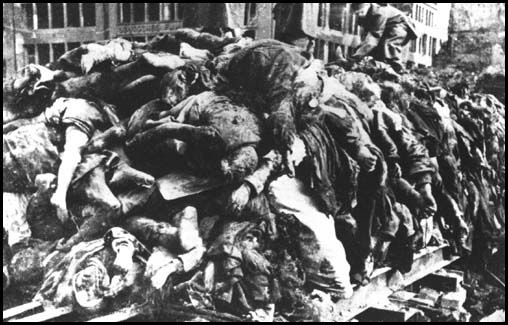
Dresden photos...
 Lancaster bomber dropping the bombs on Dresden

Dresden before the bombing Dresden after the bombing
Great contributions!

Remember that you all need to provide 3 posts, 1 of which has to be analysis, where you explain how and why you think Kurt Vonnegut has chosen to write the things he has. It could be the inclusion of a particular character, event or even an overall analysis of the text as a whole. The choice is yours.
The link below is a critical analysis I found on the web that might help you in your analysis. Check it out.
http://www.geocities.com/Hollywood/4953/kv_slaughter.html
See you in class!
I DONT GET THIS BLOGGING STUFF!!!
the one thing i really like about slaughterhouse 5 is that at first something might not make sense but when you read on it all starts to fit together like a jigsaw puzzle!!
anyways really enjoying it :)
lily
Tuesday, October 13, 2009
http://www.geocities.com/CapeCanaveral/7997/whatis4d.html
http://tetraspace.alkaline.org/
Check them out.
Pictures of Slaughter House 5 by Emily Coupe
Pictures of Slaughter House 5
This one outlines the main theme of the book. 
This picture shows what it was like to be in Billy's position during the war.
 And this picture shows Billy whe he was in the war.
Hope you liked them :)
Monday, October 12, 2009
tralfamadore...so it goes...
The Tralfamadorians dont seem to mind that the entire universe is going to be destroyed by one of their experiments...
Do they not care for preventing it because of their belief of what happens when someone dies? they believe that it will go on to live in different places and times. I think thats where "So it goes" comes from, kind of saying so it goes on to another place and time kind of thing...
yeah I'm gonna stop now.
chloe.
characters in Slaughterhouse Five
Billy Pilgrim
Roland weary
Paul Lazzaro
Kilgore Trout
Edgar Derby
Howard Campbell
Valencia Merble
Robert Pilgrim
Babara Pilgrim
Tralfamadorians
Montana Wildhack
Wild Bob
Eliot Rosewater
Betram Rumfoord
The Souts
annnooyyinggg
Aaaannnyywaayyyy, I'm getting off track which I tend to do, the book's alright. It goes off track a fair bit as well which I enjoy cause I can say, "HEY I DO THAT TOO!" but yeah. Ok, I've forgotten what I was originally gonna write. hahahaha oh no that's right, it's an ok book at times, at other times it's a little confusing but everyone finds it confusing so I'm pretty sure that's not just me.
I'm gonna stop writing now cause it's annoying me and I'm having a pretty terrible day and the writing is just making it worse.
See ya's.
The author and Dresden

I found this picture of Kurt Vonnegut and put it on here because I had to post sooner or later.
 Also, this is what Dresden looked like before it was bombed.
Sunday, October 11, 2009
okay, so slaughterhouse five...
I actually do like the book so far but i need to understand it more. i think it's well written but i dont really get why he likes the Tralfamadorians so much if they treat him badly... at least, that's what i took from it.
There Jess, happy?? i posted a blog, i feel so special :)
Scout Rodrigo
Wednesday, October 7, 2009
Taking the plunge...
My thoughts on Slaughterhouse 5 so far...

Someone else post something so we can get the ball rolling! (I'm looking at you Scout)
=D
Monday, October 5, 2009
Welcome to Slaughterhouse High
Hi all. This is the first post for MS Lit class at Eltham High on Kurt Vonnegut's post modern classic Slaughterhouse 5. You can make any number of different contributions to this blog, from adding pictures, to links to music that you think suits the themes in the book, to adding video clips or podcasts, to simply writing down what you think about the book, or asking others in the class about an aspect from the book you don't understand.
Remember that the whole world will be able to see what you write, so nothing inappropriate or nasty about other people in the school or wider school community.
Having said that, feel free to criticise the book and talk honestly about your experiences reading this text and how its stacks up against other books you have read or loved. Be sure to provide reasons that support your opinions.
Your posts will no doubt be far more interesting than this one. I look forward to seeing what you all have to say.
Cheers,
Mr Ford